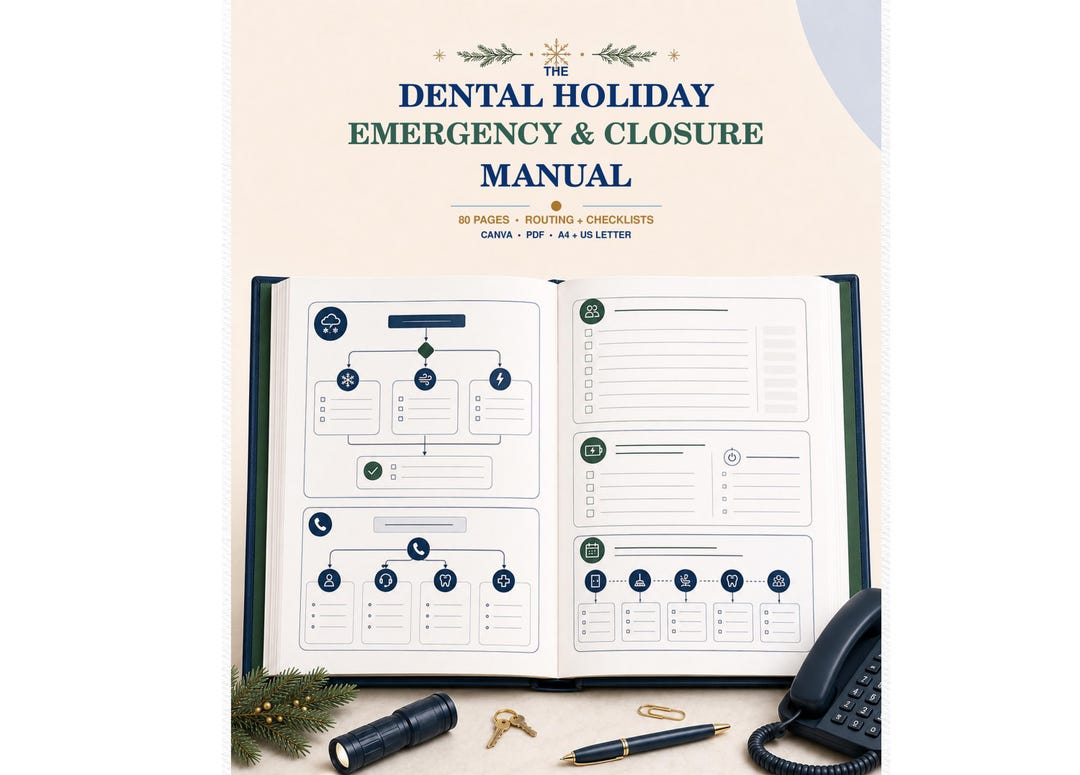
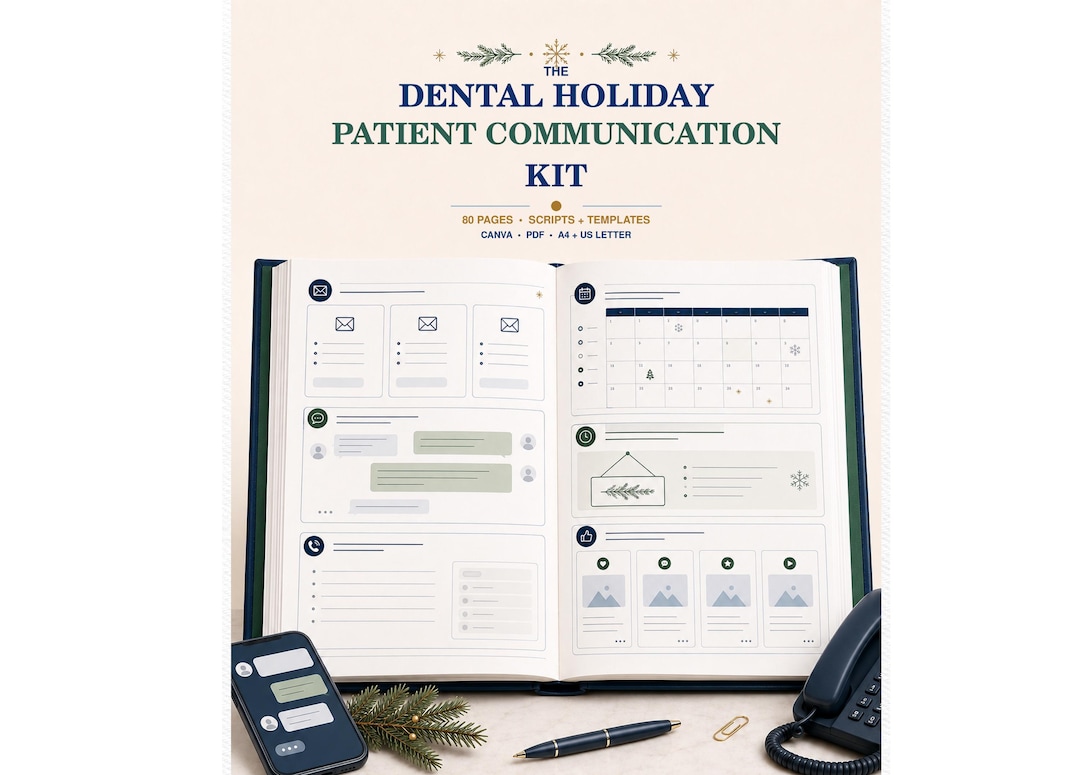
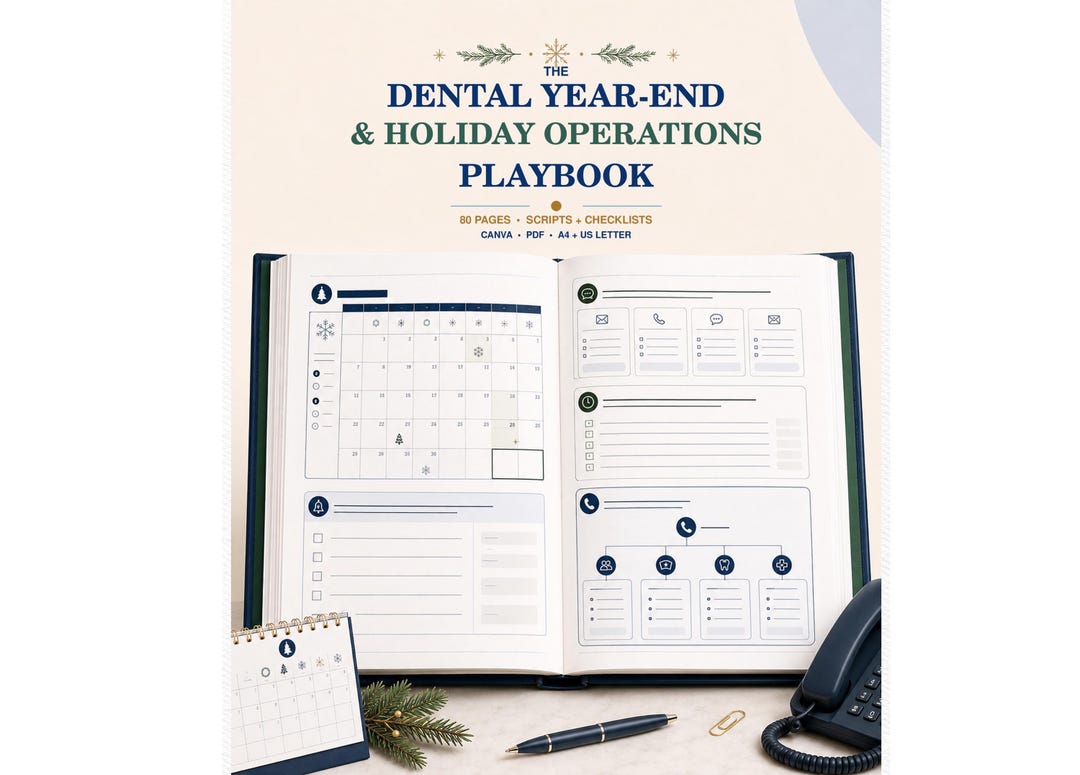
Make the binder operational, not decorative
An emergency binder should help the team act when normal routines are disrupted. Keep it easy to locate, assign an owner and review it on a fixed schedule. A digital backup can support access, but the practice should decide how essential information remains available during power or internet interruptions.
Core sections to organize
- Emergency and utility contact directory
- Leadership call tree and staff notification process
- Office closure and reopening checklists
- After-hours phone, voicemail and email scripts
- Patient rescheduling and communication workflow
- Vendor, laboratory and building-management contacts
- Incident documentation and follow-up forms
- Review log showing dates, owners and revisions
Keep clinical emergency protocols separate and approved
Operational templates should not be treated as clinical emergency instructions. Medical emergency protocols, medications and response training must follow applicable regulations, professional guidance and approval from qualified clinical leadership.